Karen Barney used Vrbo to book a vacation rental to celebrate Christmas in Puerto Vallarta with extended family. But after she pressed the confirm button, this first-time Vrbo user got a surprise from the vacation rental owner. It turns out the property wasn’t actually in …
Valentine’s Working day is pretty much right here, and Disney Parks and Resorts all-around the earth are finding in on the romantic enjoyable with specialty food stuff and beverage products! Hong Kong Disneyland Resort Hong Kong Disneyland Hotel Walt’s Cafe (out there Feb. 13 by Feb. …
Grown in central Uganda, kayinja bananas are used to make juices and beers. Ratnakorn Piyasirisorost
For the last 15 years, Dan Saladino has been traversing the planet, tracking down the stories behind some of the world’s rarest foods. On his first deep dive, the food journalist and presenter on BBC Radio 4’s “The Food Programme”headed to the land of his paternal ancestors, Sicily, to hear the tales behind the vanilla orange, a local delicacy. But what Saladino thought was going to be an uplifting piece about a rare orange variety was one fraught with tales of farming duress, as direct competition from monoculture varieties like navels and Valencia oranges was driving the vanilla orange toward extinction.
On this same trip, Saladino learned about the Slow Food Foundation’s Ark of Taste, a growing catalog of the world’s most endangered foods. “What really grabbed me about this catalog and these foods,” says Saladino, “was that each entry wasn’t just a description of a disappearing genetic resource, but it also took me into history and places that I had no idea existed. Every entry in the catalog transported me to a different place and time.”
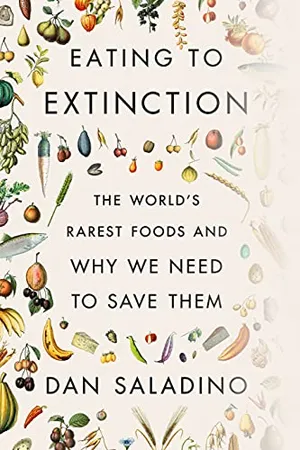
In his new book, Eating to Extinction: The World’s Rarest Foods and Why We Need to Save Them, Saladino highlights many of these foods, from American Plains bison to lambic beer in Belgium, not only making the argument that we are in danger of losing a culinary diversity that is good for both our health and our planet, but also tracing the origins of this diversity and how it all came to be. “The story of these foods, and the way in which they’re presented in the book,” says Saladino, from wild foods associated with hunters and gathers, to cereals, vegetables, meats, and more, “is really the story of us and our own evolution.”
The distinguished BBC food journalist Dan Saladino travels the world to experience and document our most at-risk foods before it’s too late. He tells the fascinating stories of the people who continue to cultivate, forage, hunt, cook, and consume what the rest of us have forgotten or didn’t even know existed.
Prior to colonization, murnong—a.k.a the yam daisy—was a prominent ingredient in the diets of many Aboriginal tribes people throughout what’s now southeastern Australia. This subterranean radish-like root grew prolifically across the grassy hillsides of Victoria, often blanketing them in thick fields of yellow flowers that resembled dandelions. Both juicy and nutritious, murnong provided year-round sustenance to Aboriginal peoples who ate it both raw and cooked for tens-of-thousands of years.
Murnong thrived in direct sunlight, so during the dry season Indigenous Aboriginals would light fields on fire to clear away any dead vegetation and leave these underground tubers untouched, with any remaining ash acting as fertilizer. They would also use digging sticks, or “yam sticks,” to gather murnong from the fields, an act that would separate and scatter the tubers and allow them to grow copiously. “You could argue that this was a semi-domesticated plant root,” says Saladino, “the Aboriginals’ equivalent to a staple crop. Imagine their horror when European colonists first arrived and allowed their animals to spread throughout the landscape.”
It turns out that the colonists’ livestock, especially sheep, loved murnong, and were given free range over the fields. By the 1860s, the tuberous root was nearly extinct, relegated to cemeteries and other unfrequented side plots. Today, murnong is making a slow comeback through the likes of Aboriginal community gardens and the country’s celebrated chefs such as Ben Shewry, who incorporates the plant into dishes at his modern Australian restaurant, Attica.
Cereal
Olotón Maize—Oaxaca State, Mexico
Olotón maize
Allen Van Deynze/UC Davis
There are thousands of maize varieties around the globe, and 59 native varieties in Mexico alone. One in particular is olotón, a bizarre type of corn that grows high among the rugged eastern highlands of Mexico’s Oaxaca State, in a small village belonging to its Indigenous Mixe people. It’s prepared and eaten like most other types of corn, but olotón can reach upwards of 20 feet tall, and has a highly unusual root system that allows it to get its nitrogen both from the ground and from the air. Unlike other maizes, Olotón has a system of aerial roots that sprout outward from its stalk and produce a strange dripping mucus, one that houses a complex nitrogen-fixing microbiome that can transform nitrogen gas in the atmosphere into self-fertilization. “So mind-blowing,” says Saladino, “the interaction between the plant, the air, and the microbes. Here’s a genetic resource that could be beneficial to all of us, and it’s one that to me represents the endangered foods that we’ve ignored or destroyed and now realize that we need.”
The Atlantic coastal areas of the American South—including its dozens of barrier Sea Islands like Sapelo and other parts of the Lowcountry—are home to the Gullah-Geechee, descendants of West and Central Africans who were brought over as slaves from their homeland and put to work on the local plantations. Due to the remoteness of these plantations, these slaves were able to maintain many of there Indigenous traditions. This includes sustainable rice farming, a vital component of which is the Geechee red pea—a rotation crop that adds nitrogen back to the soil between plantings. This small, ruby-colored heirloom legume has a rich flavor and an even richer history. It’s a main ingredient in the traditional Gullah dish, “Reezy Peezy,” made with unripe peas and Carolina Gold rice. However, with new development encroaching on the Sea Islands, and many Gullah-Geechee descendants moving away to cities to find work, their food, culture and traditions are in danger of disappearing.
“I met Gullah-Geechee descendant, chef, and farmer [and now cookbook author] Matthew Raiford at a Slow Food festival in Turin, Italy,” says Saladino, “and soon the whole world was opening up to me through this tiny pea. So much had been learned over thousands of years by successive generations of farmers. Now, many people of African heritage who’d left the land in the 20th century, like Raiford, are reclaiming that expertise and knowledge. It’s this knowledge that we need.”
Tucked away in the northern Atlantic Ocean, the Faroe Islands are a remote archipelago where sheep outnumber the residents nearly two-to-one, winds are fierce, and there’s hardly a tree in sight. Without access to firewood, the Faroe’s inhabitants have had to find another way to cure meat. The result: skerpikjøt, a type of dried and fermented mutton made from the shanks and legs of sheep that’s a local delicacy, although one that’s endangered—as the country’s continuing economic growth has allowed for increasing outside shipments of chicken, pork and beef.
Skerpikjøt is preserved in specially built wooden sheds called hjallur, which have sides composed of vertical slats that allow space for winds—and the salt that it carries with it—to blow in from the sea. For the next five-to-nine months, the salty air coats the hanging meat. As the carcasses ferment they also start to decay. It’s a sort of “controlled rotting” that provides the meat with a sharp taste and distinct pungent smell. “It’s too clever to be invented,” Saladino says. “All the humans needed to do was just kind of observe and understand what nature could provide.” Once the fermentation slows and the meat becomes drier and firmer, it also mellows out in flavor. At this point, it’s ready to eat.
In Eating to Extinction, Saladino describes the taste as, “sweet, salty and musty with a kick of acid.” It’s like fine wine. “Appreciation,” he writes, “comes with experience.”
“It’s probably the most beautiful food in the book,” says Saladino, referring to shio-katsuo, a heavily salted and dried skipjack tuna that’s believed to be the origins of katsuobushi—a more prevalent type of dried and smoked bonito tuna. Today, shio-katsuo lives-on solely in and around Nishiizu, a fishing town on Japan’s Izu Peninsula. Because it’s used as an offering to Sinto deities, its preparation requires careful and delicate expertise. In fact, Nishiizu resident Yasuhisa Serizawa is shio-katsuo’s last-surviving producer.
After salting the fish both inside and out for more than two weeks, Serizawa then decorates it with what Saladino describes as “golden bristles of rice stalks.” This involves a skillful threading of these stalks so that they sprout from the fish’s mouth and through its gills, as well as adorn its body.
Once the offering ceremony is complete, the shio-katsuo can then be eaten, either thinly sliced or made into flakes to sprinkle atop rice and vegetable dishes. “With just a tiny amount of grating it packs this punch of umami and transforms any dish,” says Saladino.
Fruit
Kayinja Banana—Uganda
Kayinja bananas
Penpak Ngamsathain/Getty Images
While Southeast Asians were the first to domesticate bananas as early as 8000 B.C.E, a second wave of domestication occurred much more recently (about 2,000 years ago) in Africa. Known as “East African Highland” bananas, this domesticated subgroup consists of approximately 200 individual cultivars, each with its own cultural role and culinary uses. One in particular is the kayinja, a versatile banana grown in central Uganda that’s used to make juices and beers. It’s also used in traditional marriage ceremonies, in which the groom presents the bride’s family with a Kayinja beer he’s brewed himself.
The bulk of the international banana trade is based around the Cavendish, a low-priced and sterile, cloned banana that’s extremely susceptible to a deadly fungus called Tropical Race 4 (TR4). However, most banana varieties co-evolve with the fungal diseases that try to take them down, each one trying to outmaneuver the other. In Uganda, where bananas are a staple food, local farmers are exploring both the monoculture model of cultivating a single crop and another promoting genetic diversity.
“Which way does Africa go?” says Saladino. “With the genetically edited type of banana? Or—as so many of the other stories in the book reveal—using traditional methods of farming with lots of diversity, so that you can find a way to defend your crops from being wiped out from disease.”
Salers is a type of raw milk cheese that dates back 1,000 years. It’s one of the world’s oldest surviving cheeses and, as Saladino writes, “one of the most grueling to make.” Produced only in the high, isolated reaches of south-central France’s Auvergne region, Salers cheese utilizes the milk of Salers cows, mountain foragers whose population has noticeably reduced over recent years. Perhaps because there are just 10 or so producers still using this cattle breed, one that adheres to a very strict grazing protocol that only occurs from April 15 to November 15 annually.
Each spring, farmers accompany their cattle farther up the mountains—at 2,788 feet in altitude or more—where the latter can feed on thick and fertile grasses. For the next six months, the farmers live in small stone cottages and collect the cows’ milk twice daily, morning and night. They then use the raw milk to make Salers, a semi-hard cheese that’s a rich yellow color and has a taste that’s both nutty and intense, though this can range depending on the length of the cheese’s fermentation. “This cheese is made without a starter culture because the milk is so alive, microbial,” says Saladino. “It’s interesting that for so long, we’ve done everything we can to kill off bugs and bacteria, yet now we understand how valuable they are to our health.”
Alcohol
Qvevri Wine—Georgia
Qvevri clay pots
EyesWideOpen/Getty Images
To many Georgians, winemaking is a spiritual process, and drinking, writes Saladino, is “a way of communing with God.” From the extreme diversity of the country’s grapes to the way in which wines are stored, viticulture in Georgia is unlike anywhere else on the planet. Take qvevri: these ancient terracotta vessels can hold between 13 and 1,000 gallons of wine, depending on their size, and are used for the fermentation and aging of traditional Georgian wine. Local winemakers fill each of these egg-shaped pots—pre-dating barrels by several thousand years—with grape juice, skins and stalks, and then bury them in the ground, where steady temps allow the wine to develop and ferment slowly year-round. The qvevri’s oval shape allows fermentation to occur evenly, and at the bottom of the vessel is a pointed cone, which collects any leftover pumice. This process, which Georgians believe in vehemently, results in a pristine wine. “The 20th century, with Communism and the top-down control over what was being grown in the Soviet Union, heavily influenced the disappearance of diversity,” says Saladino, which led to the endangerment of Georgia’s wines, as well as its wine making processes. “Thankfully, there are people out there who are carrying on the traditions.”
Stimulants
Ancient Forest Pu-Erh Tea—Xishuangbanna, China
Pu-erh
Zhang Peng/LightRocket via Getty Images
Pu-erh is a rare, fermented tea, and making it from wild tea leaves that grow in an isolated mountain region in China’s southwestern Yunnan province is a lengthy, involved process. First, its leaves are sun-dried on wooden racks to wither and darken. They’re then cooked over hot fire to prevent full oxidation, and rolled and kneaded to disperse any excess moisture. The leaves are formed into solid cakes that ferment for months, and sometimes years. As it ages, its flavors shift and evolve, displaying characteristics of the ancient forest where it originates. These include the forests of Xishuangbanna, one of Yunnan’s three main pu-erh regions, as well as one of the richest biodiversity hotspots on the planet. “Unfortunately,” says Saladino, “history overwhelms this story with post-Mao effects and a lot of destruction, including the rubber industry. And then, what should be a positive thing of reappraisal and new value as more people are discovering pu-erh becomes one in which it’s being overexploited, and it seems to be the Indigenous people who are losing out in this as well.”
Authentic—though endangered—pu-erh uses a minimalist approach to processing, meaning you can taste everything from the soil and its nutrients to—some say—all that the tree has endured and experienced. One pu-erh might taste earthy and mushroom-like, another slightly smokey. No two pu-erhs are the same.
Sweet
Criollo Cacao—Cumanacoa, Venezuela
Criollo cacao
Juan Barreto/AFP via Getty Images
Creamy, sweet and oh-so-aromatic, criollo is an extremely fine, high-quality cacao that ancient Mayans considered to be the food of the gods. It’s the world’s rarest type of chocolate, representing less than 5 percent of the cocoa production on the planet. It lacks bitterness. And it’s very difficult to grow. The criollo tree is native to Central America, and is cultivated only in rainforest regions of Central and South America where the climate is humid and temperatures range between 65 to 90 degrees Fahrenheit. This includes areas of Venezuela, where criollo beans thrive.
Many Venezuelans, including chef, entrepreneur and chocolatier María Fernanda Di Giacobbe, believe criollo can be the answer to the country’s economic crisis. “Here is this natural resource,” says Saladino, “that long after Venezuela’s oil is gone will hopefully be there providing an income in local economies across the country, as well as a renewed sense of pride. María Fernanda sees the potential of this resource, and that Venezuela has the expertise and ability to deliver the finest quality of cacao worldwide.”
Jeremy Hawkins is a male who appreciates a very good offer. That trait led him to the Vacation gasoline station and ease keep at Fifth Avenue and Bryden Avenue. Saturday, in which the value of regular gasoline was $3.14 per gallon. That is nicely below …
Evidence of vaccination, Covid-19 restoration, or a negative examination final result is necessary to obtain some solutions and amenities in Portugal Transportation Secretary Grant Shapps declared alterations to constraints previously this month, stating the improvements will assistance to bring intercontinental vacation “back to the very …
Whether you seek a getaway to reunite with loved ones or a wellness retreat to get your pandemic-worn health back on track, a slew of new hotels will be ready to welcome you. For our annual list of top luxury hotel openings, we scoured the globe to find properties of all types, from high-end brands to boutique gems, with top-notch amenities, striking facilities and coveted locales.
From Kauai to Kuwait, here are Forbes Travel Guide’s most anticipated hotel openings for 2022:
This 712-acre working ranch will feed your body (its restaurants use ingredients from local farms), spirit (the spa’s wellness experts will create personalized programs) and sense of wonder (snap a photo of the 60-by-40-foot Infinity sculpture). Unwind in the 78 rustic-luxe cottages and suites featuring terraces with fire pits and views of the Mayacamas Mountains and the property’s vineyards.
Steps from sister property Atlantis, The Palm, this resort will go big with 795 rooms; 17 restaurants from noted chefs like José Andrés, Ariana Bundy and Heston Blumenthal; the world’s largest waterpark; a flashy water and fire show; and a showstopping 22nd-floor, 295-foot-long infinity sky pool.
Tucked along a premier shopping thoroughfare, this more-than-150-year-old building will have its façade and interiors restored. The boutique hotel will also have 30 rooms, an executive lounge and impeccable touches like a mural honoring Scottish explorers. But its best asset may be its unobstructed views of Edinburgh Castle.
Conrad will mark its first California foray with Los Angeles’ Frank Gehry-designed cultural corridor, The Grand LA. The 305-room property will have sweeping vistas of Walt Disney Concert Hall, a 16,000-square-foot rooftop pool and two José Andrés restaurants — one with Latin and Asian flavors and the other with classic Spanish fare.
This 13th-century refuge is steeped in history. The 108 unique rooms will reside in a former monastery, a 15th-century chapel will host weddings and there’s a 200-year-old botanic garden. But it will also offer modern perks: four restaurants from renowned chefs like Gert De Mangeleer, who will revive his famed Hertog Jan, and an innovative three-floor botanical spa.
If you need a sign that Tampa is on the cusp of a luxury travel resurgence, this spring opening is it. Nestled within the new 56-acre Water Street Tampa area, the hotel will have 172 rooms (including a vast 2,195-square-foot penthouse) and six restaurants and bars, including a rooftop lounge.
Located within The Avenues — Kuwait’s largest mall with more than 1,100 stores, an amusement park, a movie theater and more — the hotel will have easy access to entertainment. But with 200 sophisticated accommodations overlooking the skyline, Japanese restaurant ROKA Kuwait and a 13,560-square-foot spa, you’ll find plenty to keep you busy in the hotel.
Spread across 17 acres in the Raa Atoll, this island getaway will plunge you into paradise with 80 minimalist villas, an Italian restaurant and bar at the end of a picturesque jetty and a spa with eight rocket-ship-shaped suites hidden high among the palm fronds.
One of the tallest buildings in the area, the newly built hotel will afford views from the Empire State Building to the Statue of Liberty. But your eyes will be locked on the property’s dining options — chef José Andrés will serve a mezze menu at Zaytinya and avant-garde cuisine at Bazaar and oversee the rooftop bar — and the 6,800-square-foot spa.
This historic building helped inspire the James Bond series.
Grain London
Raffles London at The OWO
Stay in the former offices of British prime ministers like Winston Churchill and David Lloyd George when Raffles opens in the Old War Office. The white Edwardian building will hold 120 rooms, dining from decorated chef Mauro Colagreco and a rooftop restaurant and bar overlooking Whitehall and Buckingham Palace.
Tech pioneer Larry Ellison will convert his Porcupine Creek home and golf course into a 230-acres desert wellness destination. Like its excellent sister property Sensei Lanai, A Four Seasons Resort in Hawaii, this retreat will adopt a science-based approach with a state-of-the-art diagnostic center, a slew of fitness and mindfulness programming, a spa and healthy fare by Nobu.
Along the Cumberland River and a block from Broadway’s honky-tonks, a glass tower will house 230-plus rooms, all with city or water vistas. Check out the seventh-floor terrace’s infinity-edge pool and alfresco restaurant and exclusive experiences like penning a country song with a local musician.
The 79-story skyscraper recently arrived on the scene with some of the largest accommodations in the southern China city and luxurious amenities like Diptyque toiletries and Dyson Supersonic hairdryers. Don’t miss the 68th-floor spa with a pool under cathedral ceilings and the modern Cantonese plates at The Bay by Chef Fei.
Australia’s tallest hotel will deliver unrivaled views.
Soaring above the city, The Ritz-Carlton, Melbourne will be Australia’s tallest hotel. Zip up to level 80 to check in and then take in sweeping views of the bay and the skyline. More riveting vistas will be on display from the 257 rooms and the indoor infinity pool.
Since 2013, family-owned Nicewonder Farm & Vineyards’ bucolic 450 acres showcased fare from James Beard-nominated chef Travis Milton, wine and yurts. But the mountain escape will add a 28-room luxury inn with a presidential suite, an infinity pool, a spa and a new restaurant from Milton called Hickory.
The alpine resort gets a modernist makeover at this ski-in/ski-out Canyons Village chalet. There’s a Japanese American steakhouse; a lively pizza parlor; après-ski in front of the lobby lounge’s fireplace or outdoors on Ski Beach; and Park City’s only rooftop pool and bar.
The Ferragamo family will expand to Milan.
Lungarno Collection
Portrait Milano — Lungarno Collection
The style tastemakers in the Ferragamo family will bring a new hotel to Italy’s fashion capital in an unlikely place: a former archiepiscopal seminary. The divine structure has a grand 1652 baroque entrance that opens onto an imposing nearly one-acre piazza framed by a double-colonnaded loggia. Its once hallowed walls also will contain restaurants, a shopping arcade and event space.
This 14-acre cliffside enclave will bring Mediterranean flair to Providenciales’ north coast. Forty-six cottages will have plunge pools overlooking the ocean. The big attractions will be the Beach Club’s secluded stretch of sand, a 130-foot jetty lined with daybeds and the largest infinity pool in Turks and Caicos.
Take in the stunning red rocks from the adults-only hotel’s 40 Atriums, standalone cube-shaped accommodations that hover on tall steel piers. Most have a rooftop deck with a roaring fire pit and a daybed perfect for stargazing. Inside each glass-walled Atrium, enjoy 360-degree views of the landscape.
Mayfair gets another luxury hotel.
Mandarin Oriental Mayfair, London
Mandarin Oriental Mayfair, London
To complement its Knightsbridge grande dame, Mandarin Oriental will move into another tony London neighborhood: Mayfair. But the new Rogers Stirk Harbour + Partners-designed boutique hotel will be more intimate with only 50 accommodations, and it will have a fine-dining restaurant, a lobby lounge and a rooftop terrace bar.
Raffles will unveil a 35-story LEED Gold structure in its first Americas venture. It will possess memorable features like a curved oak grand staircase that spirals through a three-story sky lobby. Also in the works are a speakeasy and a guests-only spa with an indoor pool.
Every accommodation in the all-suite-and-villa island hideaway is a stylish sanctuary. But villas have an edge with sprawling pools and courtyards. A wellness coach will lead you through offerings like hot sand therapy on a Gharieni quartz bed, indulgent Biologique Recherche treatments and a Pedi:Mani:Cure salon by Bastien Gonzalez.
The two towers’ distinctive cutout façades designed by Qatari architect Ibrahim M. Jaidah recall coral reefs in the waters surrounding Qatar. Within the hotel, you’ll see eight restaurants and bars, including a cigar lounge; a spa; and a Manor Club executive lounge for Club Room and Suite guests.
Stop by this luxury inn.
The Inn at Mattei’s Tavern, Auberge Resorts Collection
A popular stagecoach stop during the California gold rush and later a Prohibition speakeasy, this property has a storied past. Its newest incarnation will be as a luxury inn with 67 rooms and cottages sporting a modern farmhouse design, an open-air restaurant and an outdoor pool with a bar, cabanas and fire pits.
The recently opened hotel lures you in with its secluded bay. But it also boasts five pools; nature-inspired décor (lots of stone, wood and metal); 349 rooms with a balcony and tub or a patio and plunge pool; and a spa featuring a shaman and services inspired by Mayan gods and drawn from Mexican herbs.
This NoMad newcomer will combine a restored historic bank building (originally designed by McKim, Mead & White) and a new 24-story glass tower. Inside, Martin Brudnizki enlivens the 153 rooms with eclectic accents, like a dresser with gold elephant head knobs and a mother-of-pearl bar cart.
Close to the popular square Puerta del Sol and the Golden Triangle of Art — Madrid’s three top art museums — this well-situated urban escape will have 200 accommodations, some with terraces; a sky bar and rooftop terrace; an outdoor pool; a state-of-the-art fitness center; and a spa.
A waterfront location in the world’s yachting capital will influence this 189-room hotel, including its yacht-shaped design from Kobi Karp, a yacht-club-like Ocean Terrace with Atlantic panoramas from two infinity pools and Honey Fitz, a lounge named after John F. Kennedy’s presidential yacht and set to be ready with pours of coffee in the morning and champagne at night.
Although this black-covered hotel first opened for previews in November, only a few public outlets such as Tides (chef Gunnar Karl Gíslason’s modern Icelandic restaurant) have opened so far. The property’s big debut will be in the spring when it’ll unveil 253 inviting rooms with ash wood and gray oak, a “social spa,” a rooftop bar and a nightclub.
The 400-foot-long pool that seems to stretch into the horizon will be reason enough to stay at The Ritz-Carlton, Paradise Valley. But the 20-acre desert haven will offer much more, including restaurants using produce from the resort’s citrus orchard and garden, a meditation garden and an indoor-outdoor spa.
St. Regis’ vice president and global brand leader George Fleck called this tower “a skyline-defining icon.” That’s not hyperbole — the hotel will reside in the city’s third-tallest skyscraper and the tallest building in the world designed by a woman (architect Jeanne Gang). The 101-story glass structure will showcase 360-degree views of Chicago and Lake Michigan.
This beachfront sanctuary will take up 100 acres of coastline. The ocean-facing 173 rooms and suites will have bright interiors with white, gray and pops of pink as well as balconies with plunge pools. A spa and five restaurants and bars will round out the offerings.
These two towers are an architectural standout.
Raffles Doha
Raffles Doha
The eye-catching U-shaped towers housing this hotel will symbolize the scimitar swords in Qatar’s national seal. Inside, you’ll discover 132 suites with butler service, shopping, movie theaters, restaurants and a cigar lounge. The sumptuous Royal Suite will span the 33rd and 34th floors with its own gym, spa, games room and salon.
Singer Island will provide a soothing backdrop for this wellness retreat. Indulge in the four-story spa’s services and Florida’s only indoor-outdoor hydrothermal experience; join yoga, boot camp and Egoscue classes; try IV and sound and light therapies; consult with sleep specialists; savor plant-based fare; or take to the surf.
When the Amman hotel opens in the heart of Jordan’s capital, expect opulent design, nine restaurants, impressive event spaces and a blissful ESPA spa. A 5th Circle address will make it easy to explore Rainbow Street’s galleries and eateries as well as Taj Mall’s luxury boutiques.
Sitting on Petersplatz, a famous square in Vienna’s Old Town, Rosewood will occupy a historic 18th-century building. Dine in an intimate restaurant in the garden, head to the rooftop bar for views of the city and then rest in one of the 99 spacious guest rooms and suites.
Jeddah’s tallest tower will draw inspiration from the natural beauty of the Red Sea and the port city’s maritime heritage. Glimpse the water from the floor-to-ceiling windows throughout the hotel and enjoy rooms that borrow from the sea and sand with a blue and tan color scheme.
The design-centric brand will make its East Coast debut in the Crown Building (the Museum of Modern Art’s original home). The Jean-Michel Gathy-designed hotel will feature 83 rooms, a three-story spa, a jazz club, the company’s first urban private residences and a vast 10th-floor terrace.
Stay along the banks of Lake Lucerne.
Mandarin Oriental Palace, Luzern
Mandarin Oriental Palace, Luzern
For its second Switzerland property (the first is in Geneva), Mandarin Oriental will take over the stately Hotel Palace Luzern, which opened in 1906 on the shores of Lake Lucerne. The renovation will include revamping the rooms as well as a redesign of public areas, restaurants and bars.
Eco-trailblazing brand 1 Hotels will christen this Hawaiian wellness hideaway as its flagship. Choose among four-, seven- or 10-day customized itineraries that include everything from Ayurvedic therapy to infrared sauna sessions, and then have post-trip check-ins with wellness experts. The jaw-dropping sunsets from this hillside perch will also rejuvenate you.


/https://tf-cmsv2-smithsonianmag-media.s3.amazonaws.com/filer_public/5e/81/5e81df42-1579-4dde-adb7-9a2426313024/gettyimages-1300273328.jpg?ssl=1 "Ten of the World’s Rarest Foods, and Where to Find Them | Travel")
:focal(1061x707:1062x708)/https://tf-cmsv2-smithsonianmag-media.s3.amazonaws.com/filer_public/5e/81/5e81df42-1579-4dde-adb7-9a2426313024/gettyimages-1300273328.jpg)
/https://tf-cmsv2-smithsonianmag-media.s3.amazonaws.com/filer_public/95/8d/958d7d59-f677-4c7d-a417-0bb3ddcd8c0b/mwalteri6.jpg)
/https://tf-cmsv2-smithsonianmag-media.s3.amazonaws.com/filer_public/bb/40/bb40597a-8bdf-4e16-82b6-3603f66d254e/corn-field-sierra-mixe-uc-davis.jpeg)
/https://tf-cmsv2-smithsonianmag-media.s3.amazonaws.com/filer_public/80/65/806525a3-60f1-4cbc-8223-714ebaae82e9/sea_island_red_peas.jpeg)
/https://tf-cmsv2-smithsonianmag-media.s3.amazonaws.com/filer_public/3d/ad/3dadfbbf-5bb7-4aad-8e5f-eb749a7dbeb3/skerpikjot_2.jpg)
/https://tf-cmsv2-smithsonianmag-media.s3.amazonaws.com/filer_public/7d/3e/7d3e53b6-9f75-4623-84cf-dbcc261ac05b/shio_katsuo.jpeg)
/https://tf-cmsv2-smithsonianmag-media.s3.amazonaws.com/filer_public/37/bb/37bbdccb-5b1f-46f1-ba12-c84224d9cf9b/kayinja_bananas.jpg)
/https://tf-cmsv2-smithsonianmag-media.s3.amazonaws.com/filer_public/d6/42/d642e19d-c65a-4f83-b926-3473e1827532/salers_fromage_04.jpg)
/https://tf-cmsv2-smithsonianmag-media.s3.amazonaws.com/filer_public/4c/46/4c466444-7873-42e8-86f9-ace7e2de2af1/gettyimages-1047041918.jpg)
/https://tf-cmsv2-smithsonianmag-media.s3.amazonaws.com/filer_public/25/d6/25d6bf3b-1014-4506-bbb7-59edb3316aeb/gettyimages-503724474.jpg)
/https://tf-cmsv2-smithsonianmag-media.s3.amazonaws.com/filer_public/32/4f/324f6884-b165-4e63-aabd-a205e4a19cd3/gettyimages-71984213.jpg)


