“Winter is a important time to take excursions and see family and pals, in particular throughout the holiday seasons,” says Dr. Wang. “It is vital that we all do our portion when it comes to staying healthier. That means obtaining vaccinated, tested, and wearing masks …
As the holiday break time ramps up, we at last seem to be to have some excellent news, just after numerous several years fraught with fears of contagion. COVID is not the intense concern it as soon as was. “Severity of disease is down, and …
It’s hard to believe, but here we are preparing to embark on our third COVID winter, and just like the two COVID winters before it, there are a lot of unknowns ahead. This winter will be unique from the two previous ones in that it will be the first during which there will be almost no pandemic precautions in place, such as mandatory masking on airplanes. And just as we enter the busy holiday travel season, COVID is now circulating alongside other viruses that were more muted the first two years of the pandemic, namely flu and respiratory syncytial virus (RSV), which are experiencing a resurgence this fall.
“We’re all familiar with winter being a time of increased risk of respiratory virus going around. This year it’s expected to be worse, and one reason is COVID. But the other two reasons are influenza and RSV, which are poised to have a lot of increased activity,” says Dr. Dean Blumberg, chief of pediatric infectious disease at UC Davis Children’s Hospital.
Blumberg notes that because of the COVID precautions we had been taking over the past two years, includingsocial distancing and masking, the U.S. experienced decreased rates of non-COVID respiratory viral infections the previous two winters, and unfortunately, “that has led to people being more susceptible to infection [now],” says Blumberg.
That means we have pivoted once again into new and uncharted public health territory, a potential “triple threat” as some have deemed it.
“This is one of the first winters we’re going through with these normal viruses and COVID at the same time. A lot of us are honed in on how are our hospital systems going to do? How this winter plays out will tell us a lot [about] whether we’re in this emergency phase of the pandemic or we’re moving towards something else,” says Dr. Katelyn Jetelina, an epidemiologist who is the director of population health analytics at the Meadows Mental Health Policy Institute andauthor of the newsletter “Your Local Epidemiologist.”
This fall and winter are also gearing to be the busiest holiday travel season since 2019, with the number of air travelers passing through Transportation Security Administration (TSA) airport screening checkpoints reaching the highest levels they have been since the start of the pandemic—occasionally surpassing prepandemic levels.
For those heading into the holiday travel fray, the current scenario presents two sets of issues. First, there is the concern about getting sick before or during a trip, not just with COVID but with any number of viruses. This could affect the journey on several levels, from forcing a cancellation to forcing a traveler to spend their vacation time stuck inside or not feeling well. Second, there is the concern about getting others sick. The holidays are a time when many travelers reunite with friends and family and, just as during the past two holiday seasons, infectious disease experts remain most concerned about the risk to vulnerable populations, including the elderly and those who are immunocompromised.
The good news is, we have a lot of tools at our disposal to combat transmission, many of which we amassed during the past two and a half years. We can also set upour immune systems for success ahead of the holiday travel season. The U.S. Centers for Disease Control and Prevention (CDC) offers these tips for how to improve our bodies’ natural defenses.
How to enhance your immunity
Make healthy eating decisions: Limit saturated fats, cholesterol, salt, and sugars.
Exercise and reduce your stress: Physical activity has numerous health benefits and can also boost immunity by reducing stress and anxiety.
Get a good night’s sleep: The CDC reports that “sleep loss can negatively affect different parts of the immune system,” which can “lead to the development of a wide variety of disorders.”
Avoid smoking and excessive alcohol consumption: Both of these activities can weaken the body’s ability to fight disease.
Physical activity helps to reduce stress and boost immunity, according to the CDC.
How to stay healthy this holiday season
In addition to helping our immune system do its job, here are the actions that travelers can take this holiday travel season to improve their chances of healthy getaways and gatherings.
Get your flu shot and COVID booster
With the United States currently “experiencing a resurgence in the circulation of non-COVID-19 respiratory viruses,” according to a November 4 health alert issued by the CDC, the agency is strongly encouraging that everyone get their flu and updated COVID vaccines.
“Both the yearly influenza vaccine and updated COVID-19 vaccine is essential to make sure you and your family are protected. I want to underline that with the holidays around the corner, vaccination is your best protection against infection,” stated Dr. JoséRomero, director of the CDC National Center for Immunization and Respiratory Diseases, during a November 4 media briefing about the current uptick in respiratory disease.
The CDC’s update came only a couple of weeks after President Joe Biden issued a plea to the American public on October 25 to avoid a repeat of the past two pandemic winters, during which we experienced a rise in COVID infections, hospitalizations, and deaths. He urged Americans to make sure they are up to date on their COVID vaccinations, including the recently released Omicron bivalent booster.
The president noted that only a little more than 20 million Americans had received the latest bivalent COVID booster—less than 10 percent of those who are eligible.
Infectious disease experts recommend using a high-quality mask—like this Powecom KN95—when traveling.
Mask up while traveling
On April 18, 2022, a federal ruling in Florida struck down the country’s national transportation mask mandate and since that time, masks are no longer required on trains, airplanes, or in airports and other transport hubs. But for those who want to protect themselves from viruses that might be circulating on the plane, at the airport, or in any common spaces, infectious disease experts recommend continuing to mask up.
“I’ve traveled and hardly anybody is masking on planes, and I just don’t understand it,” says Dr. Blumberg. “You don’t know who you are going to be sitting next to on a plane. You don’t know if that mild cough is allergies or if they are coming down with COVID, RSV, or influenza. You just don’t know. And then you’re going to be sitting next to them for a while.”
Blumberg notes that over the past three years, he has had only one upper respiratory tract infection even though he’s a pediatrician who sees sick children. He attributes that in large part to wearing a high-quality mask such as an N-95.
“I’ve been really pleased with that. I don’t like to get sick,” adds Blumberg. “That’s why I think it’s more important than ever for people who really do want to stay healthy and decrease their risk—they should continue to mask.”
For its part, the CDC continues to recommend that everyone age two and older continue to wear a mask in indoor public transportation settings.
Reduce your risks (and the risks you pose to others) prior to travel
As of November 11, more than 2,100 Americans are still dying each week from COVID-19, according to Johns Hopkins University. “The vast majority are older and vaccinated, but not up to date. As an epidemiologist, I refuse to accept this as the ‘new normal,’” Dr. Jetelina wrote in one of her recent newsletters.
If you want to improve your chances of getting out the door in good health and protecting vulnerable friends or family at your holiday gatherings, one way to do so is to be extra vigilant in the days and weeks leading up to departure.
Dr. Jetelina emphasizes that when it comes to holiday travel, she is “laser focused on those 65-plus. If we’re going to go see grandpa, we’re going to be extra careful that week before. Meaning we’re wearing masks everywhere, we will do cadence antigen testing, [we’re] trying to do anything to break that transmission chain for those older folks. And that’s not just [for] COVID. That’s flu, too, that’s RSV as well.”
Use those at-home COVID tests
The holidays are a good time to dig out those stockpiles of COVID home tests (but make sure they’re not expired). Epidemiologists advise using them before heading out and bringing some with you during your travels.While they are certainly not foolproof, they offer an added tool in our COVID detection toolbox. Dr. Jetelina recommends testing two days before departure and again on the morning of any event or gathering, such as Thanksgiving dinner.
Eating and gathering outside—if possible—is another way to reduce risk.
Embrace the great outdoors
Fresh air and ventilation continue to be our friends when we are hoping to reduce transmission risk. Prior to travel, epidemiologists recommend either avoiding crowded indoor spaces altogether or masking up while inside, for instance when heading to the grocery store. If the weather is conducive to hosting meals or celebrations outdoors, this is another way to reduce risk.
Be flexible with your travel plans
Despite all our best efforts, there is the possibility that we will get sick before, during, or after our travels. That means we need to be prepared to cancel or alter our plans at the last minute. It’s better to make peace with this possibility and have built-in safeguards for it than to blindly hope for the best.
Have a contingency plan in place for whatever the fallout may be for any cancellation, as well as a plan for if you get stuck in your destination for several extra days with COVID or a nasty flu. Depending on the complexity of the trip, look into options like adding Cancel For Any Reason coverage to your travel insurance plan so that you can recoup some of your losses if you need to cancel at the last minute due to illness. All of the major U.S. airlines are still without flight change fees for all but their Basic Economy fares, so if you need to cancel, you can bank the money you spent on flights as future flight credits for a redo when you or the others in your crew are feeling better.
1990s Low CALORIE FRUIT COOLERS AND SMOOTHIES (Photo by J. Graham/ClassicStock/Getty Illustrations or photos) getty People in america are touring like under no circumstances just before. This summertime observed historic raises in airfare buys as cooped up adventurers created up for time and practical experience …
Many people in the extracts community have been talking about live rosin. Even some well-educated concentrate enthusiasts are unaware of how it is used. Many people associate “live” with resin, but live rosin is on the rise and becoming more popular. Using freeze-dried solvent-less hash, …
You have expended the previous few of many years being healthy and healthful inspite of the unusual instances of largely keeping property.
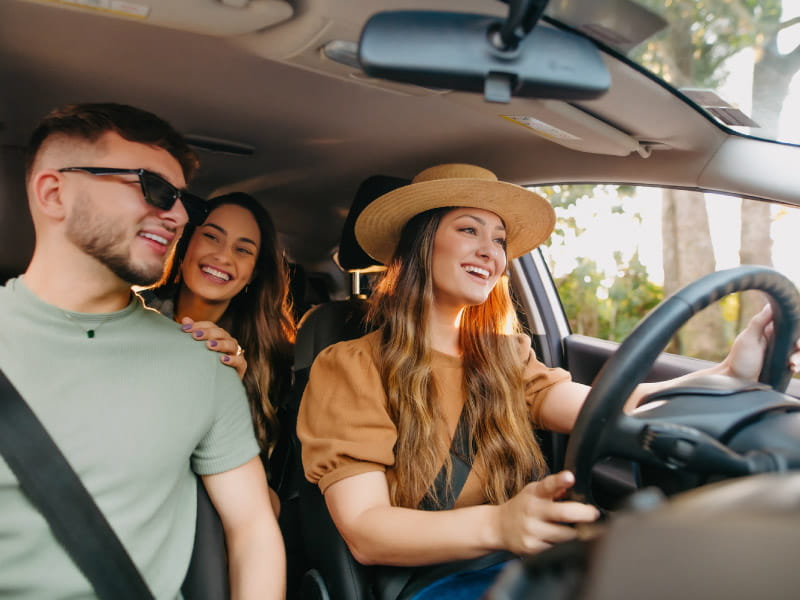
Now you happen to be packing the vehicle for a perfectly-deserved summer time street journey, fraught with speedy foods, comfort retailers and several hours of sitting around with harmful treats within just arm’s arrive at.
Can you preserve up the excellent work? You can, authorities say – if you prepare.
“The concept is to hold to one’s regime and nutritious behavior as significantly as doable on the road, just as you do at property,” reported Dr. Ian Neeland, a preventive cardiologist and associate professor at Situation Western Reserve College University of Drugs in Cleveland.
Preventive cardiologist Dr. Puja Mehta concurs.
“Every little thing is in the scheduling,” explained Mehta, affiliate professor in the Emory Women’s Heart Heart at Emory College University of Drugs in Atlanta. “It can be a large amount of enjoyment and decrease a good deal of anxiety together the way.”
So when you might be checking your budget and consulting maps and journey guides, right here are some well being-similar elements to think about.
Continue to be hydrated, but correctly. “Vacation with drinking water bottles and a cooler” rather than halting for sodas, Mehta said.
Make in breaks. When you might be sitting in the car or truck for hrs at a time, blood isn’t going to pump as nicely during the human body, Neeland reported. “It’s a great plan to halt every single two or a few several hours, just to get up and extend and walk close to and get the blood flowing.”
Which is especially genuine, he mentioned, for people today at threat for blood clots, together with these who smoke, are pregnant, get delivery regulate supplements, or have conditions this sort of as obesity, atrial fibrillation or diabetic issues. Clots can travel to the brain, coronary heart and in other places, creating a stroke, coronary heart assault or other harm.
That same advice holds for people with orthopedic troubles, Mehta claimed. “If you might be sitting for hrs, it’s not good for your back,” she reported. “And if you know you have again soreness, provide the back again assist you have to have.”
The solar doesn’t glow just at the beach. “It truly is blasting by means of the vehicle window,” Mehta stated. “Don’t fail to remember sunscreen and sun shades though you’re driving.”
“You can get sunburned on your arms and experience,” Neeland claimed. “It’s also crucial to secure your eyes from much too much UV publicity.”
Where by are your meds? Just remembering to pack them is not adequate. A vacation disrupts every day schedules, so “do not forget to just take them at the appropriate occasions,” Neeland stated.
And really don’t stash them in the trunk, Mehta advised. “A whole lot of prescription drugs are temperature-delicate,” she explained. “If you leave them in a warm motor vehicle, that is likely not a very good concept. They can shed their usefulness.”
Preserving them in the passenger compartment keeps them neat – and accessible.
“Men and women have told me, ‘I experienced the supplements, but they were in the suitcase,'” Mehta explained. “If you have angina (chest discomfort caused by diminished blood movement to the coronary heart), you could possibly need nitroglycerin. But it would not do you any fantastic if you really don’t have accessibility to it.”
Clinical problems do not keep household. “If you do acquire symptoms or concerns, it is vital not to say, ‘I’ll hold out till we get to where ever we are heading to test it out,'” Neeland reported. “If it is really really serious, it is really vital to get it checked out proper away. Pull above, call for assistance or uncover the nearest unexpected emergency home.”
Health and fitness and protection go collectively. Do not be sleepy though on the road. Adjust drivers and pull over at night, Neeland stated.
Maintain a superior night’s rest by finding at the very least seven hours a night time. Youngsters will need more depending on their age.
Research your cellphone map for a grocery shop. All those rapid-foods emporiums and fuel station usefulness merchants may well be proper at the highway exit, but they are almost certainly loaded with unhealthy temptations.
“There is ton of chips and cookies and sweet,” Neeland said. “It’s pretty hard to find clean fruit or veggies at a usefulness keep.”
Just as at residence, Mehta explained, grocery outlets equilibrium all those temptations with nutritious options: fruits, vegetables, nuts and one thing for everyone.
“When you might be touring with a relatives, everyone has a different decision,” she mentioned. “At a grocery retailer, at minimum you can attempt to select the much healthier decisions.”
If you have issues or opinions about this American Coronary heart Affiliation Information tale, remember to e-mail editor@heart.org.