The seashore at Eco del Mare. Courtesy of Eco del Mare Alongside the Lerici Coastline on the southern Italian Riviera, you are going to find a single of the most splendid seaside options in Italy, Eco del Mare. An idyllic cove with intense blue-inexperienced seas …
The four-star, spouse and children-welcoming Trump Worldwide Beach Resort in Miami’s Sunny Isles Seashore is set to flip the calendar on summer season with a special lineup of events and offerings to rejoice “Barktober” this Oct. Attendees and their animals can unwind from the comfort …
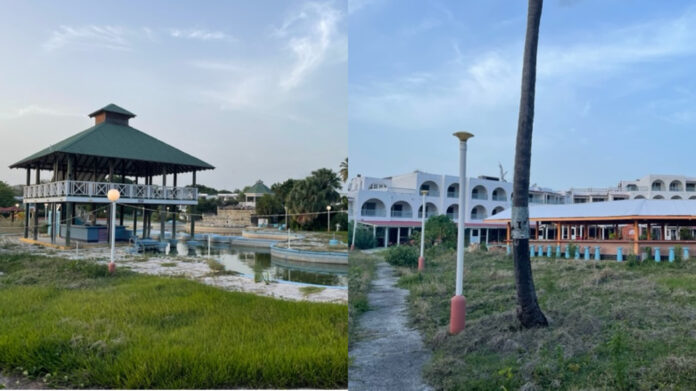
The vacation resort has fallen into a point out of disrepair because it shut in March 2020 (Observer file shots)
– Ad –
By Carlena Knight
[email protected]
The 60-day timeline declared seven weeks in the past for the reopening of the Jolly Beach Vacation resort has now been extended to Xmas.
Information and facts Minister Melford Nicholas explained to yesterday’s submit-Cupboard press briefing that the believed reopening date experienced had to be postponed adhering to the signing of a memorandum of comprehension with US holiday getaway agency Apple Vacations and reassessments of the will work ahead.
“The memorandum of being familiar with sets out a 90-working day window that will allow for us to obtain all of these goals and, the moment we have accomplished that, then of system we will be equipped to go into some portion of the operationalisation of occupancy at Jolly Beach front,” he claimed.
“That is the reason why I would have claimed we are not probable to be in a position at the very first of Oct to have the solutions out there, but unquestionably inside of that interval just before Christmas we would be expecting some form of operationalisation of the undertaking to arrive into force,” Nicholas stated.
Launched in 2001, Apple Vacations is billed as North America’s fastest growing leisure resort organization with homes across the Caribbean, Central The usa and Europe.
Even with the revised timeline, Nicholas was optimistic about the most current developments bordering the property.
In reality, he revealed that a sum of US$200,000 experienced been offered to the Community Operates Office to commence the clear-out and renovations.
Next that function by the govt, Nicholas discussed, Apple Vacations will do its section in providing complex aid and help for critical places of the venture.
He stated it is critical that the resort receives up and managing so that the country can garner the “maximum benefits” in the course of the vacationer time.
Hopes experienced been substantial that the resort would be returned to its previous glory when news was introduced in Could that eminent hotelier Rob Barrett was set to commit hundreds of thousands into the resort and just take more than its management.
Those hopes were dashed very last thirty day period when Cupboard discovered that Barrett, whose Elite Island Resorts chain includes the Verandah and St James’s Club, experienced “declined any further participation”.
In early June, Key Minister Gaston Browne explained that beneath the settlement with Elite, US$10 million would be invested into the home as aspect of a bank loan to the governing administration.
The dollars would have gone towards the maintenance and rebuilding of several of the hotel’s buildings, according to Browne, and also support with compensating the resort’s former employees who are collectively owed much more than EC$7 million in severance and remarkable fork out.
Endeavours to market the assets also strike a snag in recent months right after it was exposed that there is a US$15 million cost on it by a creditor.
That issue is nonetheless in advance of the court and the government is awaiting a selection.
But with Apple Holidays reported to be firmly on board and dollars earmarked for critical is effective to start off, the hopes that ended up when missing for the vacation resort seem to be on the rebound.
Luxury beach front resorts are well-known amid households and couples wanting for a great getaway in a warm outdoor ecosystem. In the U.S., many seashore resorts are unfold throughout the hotter states adjacent to the Atlantic, Gulf of Mexico, and Pacific. If you adore visiting …
Located along South Carolina’s northern coast, Myrtle Beach is one of the United States’ most impressive beach destinations. Stretching 60 miles, this area features bone-white, powder-soft sand, making it one of the best things to do when traveling to South Carolina. With top-notch restaurants, plenty …
It’s a tough time to be a beach lover. Rising seas and intensifying storms are wreaking havoc on global shorelines. Vacation homes along North Carolina’s Outer Banks have fallen into the ocean; Miami Beach has run out of offshore sand to replenish its eroded beaches; and storms in the Caribbean have repeatedly caused billions of dollars of damage.
The world’s 7,000 beachfront resorts operate on the literal front lines of this struggle, and sustainable tourism has become a key tool in fighting back. But beachfront resorts aren’t just reacting to changing shorelines, they’re contributing to them.
In the early 19th century, as seaside resorts became a fixture of upper-class British life, the coal-powered trains used to reach them were already heating up the atmosphere and helping ocean levels inch up. After World War II, emergent middle classes in the United States and Europe turned the beach vacation into a cultural touchstone thanks to disposable income, paid time off, affordable passenger air travel, and vaccines against tropical diseases.
By the late 20th century, paradise needed help. Sustainable tourism emerged, a concept that essentially means adopting practices to reduce negative social, economic, and environmental effects of mass tourism.
Travelers can help by choosing, supporting, and being aware of how tourism is impacting shorelines, as well as by reducing their own carbon footprints. Here are six sustainable travel ideas that you should consider before your next escape to paradise.
Sleep away from the beach
High-rise hotels and other concrete structures built right on the beach block the flow of sand, inevitably causing erosion. Once the sand is gone, resort owners face difficult choices: build a seawall to secure the land, continually replenish the beach, or abandon the building.
Resorts should be set back from the beach, ideally composed of several smaller buildings rather than a single immovable one, using materials and techniques that facilitate future relocation and repairs after storms.
Green idea: Nicaraguan law requires that new buildings be set back 164 feet from the high-tide line. This has motivated resorts like Maderas Village to construct cabanas up in the hills amid the trees. The resort used native wood and palm fronds in its construction. This all means better views and breezes for guests, faster recovery from storms, and preservation of the shoreline ecosystem.
Reduce long-haul flights
For a beach vacation involving lengthy air travel, the flight can account for three-quarters of its total carbon footprint. This means no matter how sustainably a remote resort is run, the overall impact of your stay there cannot be considered environmentally friendly. Instead, think about heading to a beach town closer to you (maybe one you can reach by train or other public transit) instead of the Maldives.
In some countries, these decisions may soon be made for travelers. Already, European countries are enacting laws to discourage air travel. France has banned domestic flights where a train could cover the same route in two and a half hours or less, and Austria has banned flights that cost less than 40 euros. The United Kingdom has considered a ban on frequent-flyer programs, which reward travelers for long-haul flights.
Smart and sustainable: Choosing a resort closer to home can make a huge difference for your vacation’s carbon footprint. If you do fly, buying carbon offsets for the trip helps. If you try to avoid flying, you won’t be alone. In Sweden, where “flight-shaming” has become a societal force, passengers in the country’s airports decreased by 4 percent in 2019.
Break your palm tree habit
Palm trees are enduring symbols of beach culture, as likely to be planted on the sands of Cancún as along the Mediterranean in the French Riviera. But coconut palms are native only to parts of the Malay Peninsula and India, and they’re almost useless in creating sustainable shorelines. Their shallow roots do little to curb erosion; they don’t absorb as much carbon as many other species; provide little shade; and require lots of water.
(Learn why Miami is planting mangroves to save its coastline.)
Planting with purpose: West Palm Beach, Florida, now requires parking lots to have trees planted in them, 75 percent of which must be shade-producing, i.e. not palm trees. Some resorts are joining in this shift. The Six Senses chain, for example, is incorporating mangroves into some resort landscaping, notably in Thailand, hoping to help redefine the concept of an ideal beachfront.
Look for resorts that empower locals
It’s hard to understand both the culture and the landscape of a shoreline if you’re an outsider. That’s why, even when foreign resort companies have good intentions, they often misunderstand and mismanage the situation on the ground, and have trouble getting buy-in from the local population. If a new shoreline protection program interferes with local fishermen’s work without understanding their needs and helping them adapt, for example, it is unlikely to ultimately be successful. Locals understand the nuances of such situations and should be empowered to contribute to their solutions.
What’s more, local agency and ownership in the tourism industry ensures that more tourism revenue remain in the local economy, rather than being channeled to foreign companies.
A recycling breakthrough: On Tioman Island off the eastern coast of Malaysia, beach tourism has been an economic driver since the 1990s. Residents were frustrated both by the growing piles of tourists’ beer bottles and by the lack of available sand for mixing concrete in building projects. Both problems were met with a single ingenious solution by a local NGO: a small machine that turns glass bottles into sand.
Ask your ‘eco-resort’ to back up its promises
No law prevents a hotel from labeling itself an eco-resort, even if it doesn’t run sustainably. Where eco-certifications like LEED and Green Key exist, their exorbitant costs exclude many smaller resorts. Slick marketing often convinces guests of a resort’s environmental cred. There’s even a term for this: greenwashing. Don’t let the image fool you.
Instead, look for small buildings set back from the water, local ownership (or locals in senior positions), windows that open to lessen the need for air conditioning, single-use plastic bans, and menus featuring local food and drink. Some responsible hotels will provide information online about electricity sources and waste management practices.
Beware of golf courses. They guzzle hundreds of thousands of gallons of water every day, often in places with water supply problems, and the fertilizer used to keep them so green wreaks havoc on nearby ocean ecosystems. They obliterate natural vegetation and often displace locals when they are built.
A beach beacon: At the plush Nihi Sumba resort in Indonesia, most guest living and dining areas are outdoors, minimizing the need for air conditioning. All buildings are set well back from the water; natural vegetation remains largely intact; and locals work in a number of higher-level positions. Plus, a new on-property water desalination and bottling plant has eliminated all single-use plastic bottles.
Avoid overdeveloped places
When beach tourism initially arrives, most residents see the financial and social benefits far outweighing the drawbacks. But as development increases and control falls to outsiders, a tipping point comes when local tourism industry is perceived to do more harm than good. In places like Italy’s Cinque Terre, residents are now trying to reduce tourism, after watching it impede the quality of life and the health of the surrounding environment.
Preventing overdevelopment before it happens requires limiting tourism numbers in an official capacity. Local governments can restrict new building permits or ban future construction on the beach altogether.
Travelers can disrupt the overdevelopment cycle by choosing less-trafficked destinations. Instead of Santorini, go to a sleepier Greek isle such as Folegandros. Bypass Costa Rica and head north to Nicaragua. Less swamped destinations also need visitor revenue far more than over-touristed meccas.
Paradise protected: The pristine white-sand beaches, stunning rock formations, and year-round 80-degree temperatures on the Brazilian islands of Fernando de Noronha remain intact thanks to the local government limiting tourism. Only 420 travelers may land on the islands each day, and all revenues fund conservation efforts. The islands’ 3,000 residents have seen their standard of living increase, without suffering the drawbacks of overdevelopment.