Nichola Court from Escape Savvy, organises every depth of her client’s vacations from commence to complete and can assurance a saving of 10{e9f0aada585b9d73d0d08d3c277fd760092386ec23cac37d50f4b8cd792b062a} when booking by means of her. January ordinarily calls for new ambitions and scheduling matters to appear ahead to for the 12 months forward. …
Editor’s Take note — Indication up for Unlocking the World, CNN Travel’s weekly e-newsletter. Get news about destinations opening, inspiration for foreseeable future adventures, additionally the latest in aviation, food stuff and consume, wherever to continue to be and other travel developments. (CNN) — Paris …
It’s a new day in Sri Lanka, both physically and figuratively. The sun is already blasting serious heat, melting away the dew that’s coating hibiscus flowers, forest trees and tea plantations. If you’re not woken by the whirring of the AC, it’ll be the birds who get you to your feet, chirping with real intention. The scent of curry and dahl already simmering for breakfast wafts through the windows.
The food is among the best in the world
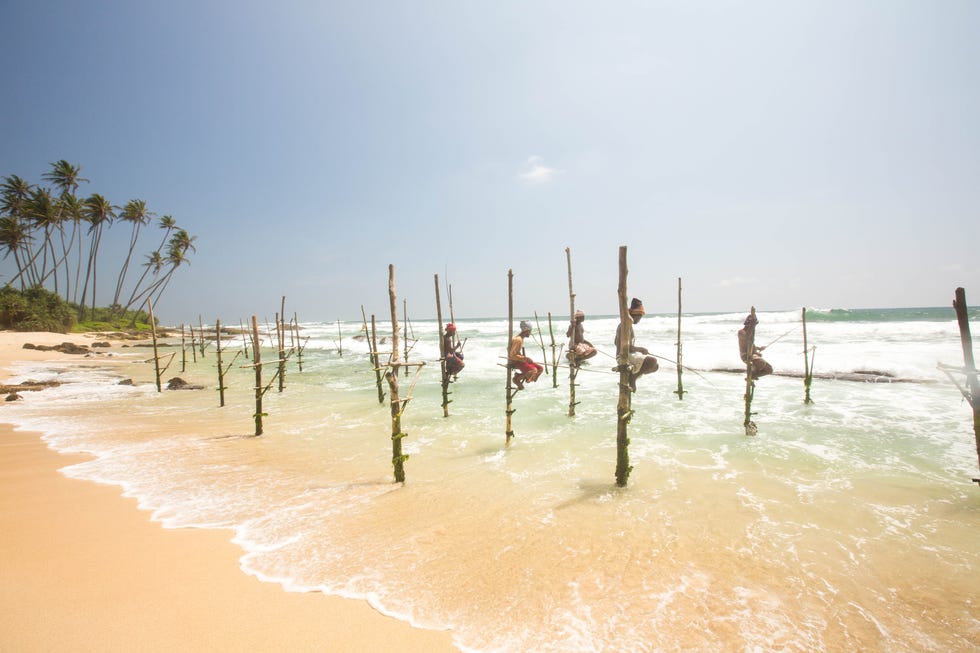
Sri Lanka is superlatively beautiful. Its trees tend to flower, its waters are cloaked in lilies, and the landscape is peppered with waterfalls, emerald-green tea plantations and plunging valleys. The beaches are sandy and flanked by palm trees and rustic food shacks, with idyllic coves for swimmers, surfers and sun worshippers. The food is among the best in the world – fragrant, light and spicy. The curry is so good you’ll question why you’d ever eat anything else again, and – at the very least – why you’d never considered it as a breakfast option. It feels safe, calm and welcoming.
For an island so small, it is almost overburdened with things to do. Whether you want culture, beaches or adventure, Sri Lanka has it all on the menu. It also offers a roaring safari trade; the current leopard count stands at around 700, but you’re also likely to see elephants, monkeys and water buffalo. It’s the kind of place where you’ll find yourself looking at flights back there before you’ve even left.
Poppy Hollis
Poppy HollisGetty Images
It is also a place of contrasts. For all its beauty and cultural richness, Sri Lanka has been blighted by hardship. The terrorism attacks in Colombo of Easter Sunday 2019 decimated tourism, wiping out thousands of livelihoods. A year later, the pandemic struck. In March 2022, just as overseas travel looked like an option again, the country reached an economic tipping point resulting in food and fuel shortages. The lack of overseas medical supplies threatened the collapse of its health system. Finally, months later and with a bailout package under its belt, Sri Lanka is on the mend. This beautiful island and its natives haven’t half taken a battering and they need our support. They want us to visit. It’s time to return to Sri Lanka.
What to do:
Stay at a tea plantation
Since a tea plant was first smuggled from China to Sri Lanka in 1824, the island has become one of the world’s biggest tea importers. The cooler climate and humidity of the country’s central highlands provide perfect conditions to grow great tea – most famously Ceylon. Sri Lankan tea is also among the cleanest, thanks to strict pesticide restrictions. Stay at a tea plantation and allow yourself to become immersed in the tradition.
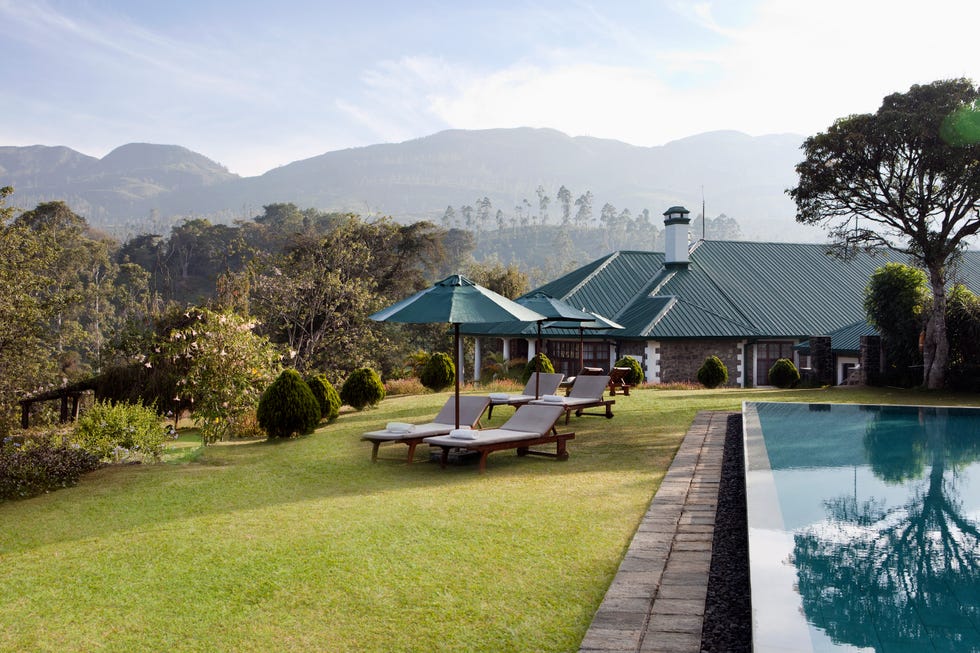
Tientsin bungalow, part of Tea Trails
Sebastian Posingis
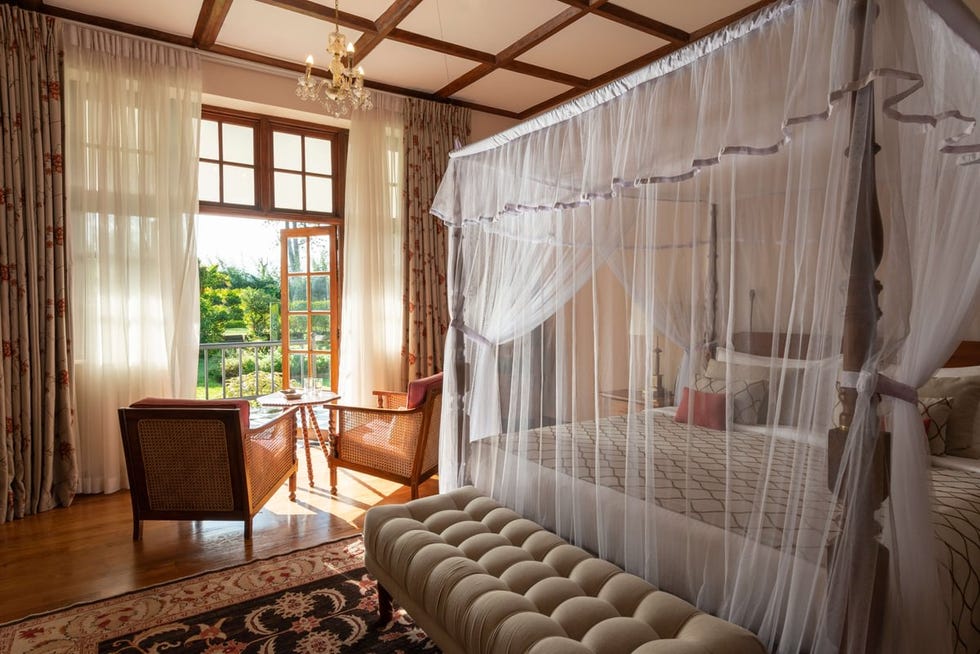
A master suite at Tientsin Tea Trails
Courtesy
Tea Trails, one of three Sri Lankan hotels owned by Resplendent Ceylon, sits in the heart of the hilly plantations and comprises five restored historic tea planter residences, called bungalows. Each has their own personality, but we stayed at Tientsin, a colonial-inspired property with six rooms nestled in the tea-carpeted mountains. The rooms are expansive with four-poster beds, spacious bathrooms and private verandahs with views of the gardens. A large swimming pool and jacuzzi offer beautiful vistas, while the verdant English garden can’t help but calm the most stressed of visitors. There is no restaurant or menu, but instead a terrace and sitting room creating an intimate dining experience. The chef is happy to make whatever your taste buds desire, be it Sri Lankan or something closer to home (but we’d recommend the traditional Sri Lankan dishes). Tea Trails also offers tea factory tours, led by engaging guides who talk through not only the history and processes, but also what makes good tea (be warned: you’ll never drink PG Tips again after you’ve heard your guide’s insights). Staying at Tea Trails is like being at an incredibly wealthy friend’s home; it’s welcoming, luxurious and with decadently decorated shared spaces for dining and reading.
Go leopard-spotting at Yala National Park
A leopard lounging in a tree at Yala National Park
laurenpretoriusGetty Images
Yala National Park is home to the highest density of leopards on the planet, and while no ranger would ever tell you that a spotting is guaranteed, it’s not unlikely to see one of these spotted creatures climbing over tree branches or chasing prey across the wilderness. Watch endangered sloth bears feasting on ripened palu fruits or elephants guiding their young through grasslands. Crocodiles keep cool in the swampy lagoons, while wild peacocks mince around hoping to attract the ladies.
Try glamping, Sri Lankan style
A ’Cocoon’ tent at Wild Coast Tented Lodge
Tim Evan Cook
Even tenuously associating Wild Coast Tented Lodge with camping seems a reach; perched next to Yala National Park (and with daily safaris on offer) on a rugged, sandy beach, this tented resort boasts the country’s most luxurious tented accommodation. Each of the 28 ‘Cocoons’ are designed to look like the rocks and boulders that characterise the landscape, both in shape and colour. The safari theme continues inside with canvas walls, leather chairs and teak floors, but with modern luxury touches – free-standing copper bathtubs, AC and a Sonos sound system.
The restaurant and bar at Wild Coast Tented Lodge
Nomadic Resorts
The design of the hotel restaurant and bar is gasp-inducing – a huge, dome-shaped, open-air pavilion with a bamboo roof made by local fisherman. Sustainably-made furniture sits next to the pool which wiggles its way round the edge of the dining area and bar. At night, the hotel offers sundowners on the beach where guests watch the sunset with a cocktail in hand. So close is the lodge to the national park that animals often make guest appearances, be it an elephant crossing your path as you head back from the bar, or monkeys swinging through the trees near your ‘Cocoon’. Daily game drives are included as part of the accommodation fee.
Explore Galle Fort
A street in Galle Fort
EyesWideOpenGetty Images
Built by Dutch merchants in the 17th century, Galle Fort is a Unesco World Heritage Site filled with pastel-coloured colonial buildings, ancient mosques, chic boutiques and stylish cafés and restaurants. Explore its narrow lanes on foot or bike, before stopping off for lunch at Pedlar’s Inn, a cavernous eatery with a secret terrace at the back. Shopping highlights include KK Boutique, a converted 17th-century mansion selling a mix of homewares, fashion and artworks made by local artists, as well as Olanda Antiques – a former Dutch colonial house with an impressive selection of antiques, collectables and reproduced furniture made in their workshop. End the day by watching the sunset from the beach.
Visit surfing paradise Weligama
Fishing boats on the Weligama shoreline
John Crux PhotographyGetty Images
It’s not hard to see why Weligama beach is fast becoming a go-to among surfers and style insiders. Not only is it safe to swim there, unlike many of the more rugged coastal areas in Sri Lanka, but its kilometre-long sandy shoreline peppered with colourful fishing boats and tropical trees is pure paradise. If you get tired of the surfing and sunbathing, take a walk to Taprobane, a tiny private island accessible by foot at low tide, where novelist Paul Bowles wrote The Spider’s House in the 1950s. The main strip is lined with cafés and restaurants – ideal for cooling down with a beer and a plate of Pakodas (fried fritters of flour and onions in a mix of chilli and spices). For a truly blissful lunch, try Silent Pup, just outside the town; a colourful, rustic beach bar, where the waves kiss your feet and turtles swim nearby.
Invest in a souvenir that celebrates Sri Lankan craftsmanship
A traditional Sri Lankan pottery stand
John Elk IIIGetty Images
Naturally, you’ll come home with a box of tea, but leave with a more lasting keepsake in the form of a handmade treasure created by one of the country’s numerous artisans. Among the colourful and creative crafts unique to Sri Lanka are Beeralu lace-weaving, a highly intricate and nearly extinct tradition that traces back to the 16th century when the island was led by the Portuguese; clay pottery, used to create rustic-looking pots, plates, vases and cups; and the handlooming of cushion covers, wall-hangings and sarees. Cane crafts are also popular in Sri Lanka, resulting in well-made bags, baskets, tables and chairs. Look out for roadside stalls and local markets to find shining examples.
Relax in luxury at a beachside resort
The Moon Pool at Cape Weligama
Sebastian Posingis
Round off your trip with a stay at Cape Weligama, regarded as one of the country’s most desirable and well-located luxury resorts. It sits on an elevated headland overlooking the Indian Ocean and boasts what is surely one of the best swimming pools in the world – a 60-metre, crescent-shaped lagoon, with an infinity edge that curves around the cape out to sea. The villas are arranged in wattas (‘gardens’ in Sinhala), each named after old-Ceylon explorers and in varying sizes, but all with the same understated, elegant decor, stone bathtubs and roomy verandas.
Inside one of the villas at Cape Weligama
Sebastian Posingis
The restaurant sits on the edge of the cliff to maximise on those dreamy panoramas, and a bar is nestled just below with pathways leading out to more jaw-dropping lookout spots. Make sure you pay a trip to the spa, where attentive and skilled therapists offer excellent massages, facials and manicures.
Feast on delicious local cuisine
Traditional Sri Lankan food served at Cape Weligama
Tom Parker
Sri Lankan cuisine is among the best in the world – expect light but fiery curries; pancakes that serve as bowls; flaky, crisp parathas; spicy, creamy lentil dahls; and fresh seafood, served with tangy flavours. Its food is born of the blend of different cultures and colonisers, from the Javanese and Indian to Arab and Dutch, which have kept bringing new twists. Although curries are a daily staple of the Sri Lankan diet, they are less heavy than what we know of curry in the UK; coconut milk and oil are more abundant than butter or ghee, creating a lighter dish.
Abercrombie & Kent (abercrombiekent.co.uk; 03301 734 712) offers a seven-night stay in Sri Lanka from £3,499pp based on two people sharing a room on a B&B basis. Includes flights, private transfers and guiding, staying across Resplendent Ceylon’s resorts.
Share The Article Final Current 2 seconds back A federal regulation about the place smoking cigarettes will be permitted inside Mexico came into effect this Sunday. The law forbids individuals from cigarette smoking in any public location, and in the case of Los Cabos, this …
Harry Li is conflicted. Ideally, the law university student wants to expend the Lunar New Yr holiday getaway in his property village in northern China’s Hebei province, but he is scared of paying out more than 12 hrs on crowded trains and buses lest he …
Traveling, whether you’re hitting up that domestic hot spot or that bucket list dream locale, is expensive. But it doesn’t have to be prohibitively costly. If your excuse for not getting out there is financial, you’ll be happy to know there are options and strategies widely available to all. Sure, if you’re hitting the road or taking off on a plane, you’re going to want to have some cash, but there are a lot of opportunities and ways to not only stretch your dollars but make some money along the way.
To get all the travel budgeting tips you’ll need to make 2023 a big year for adventure we hit up one of the best experts in the game — Gabby Beckford of Packs Light fame. Beckford is a true travel pro, she’s a multi-award-winning creator, author, and full-time travel influencer who has been profiled by everyone from Good Morning America to National Geographic and Forbes. 276 days ago (and counting), Beckford quit her job as a quality engineer in order to travel the world full time, providing travel tips, destination suggestions, and other resources to make your travels easier via her website Packs Light, where she has built a network of like-minded Gen-Z travelers interested in maximizing their travel budgets in an effort to see more of the world.
We linked up with Beckford after she returned from a recent trip to the British Virgin Islands to talk travel budgeting tips and the Packs Light ethos as we enter 2023.
“This year is really about connection,” Beckford tells me over Zoom, “the travel industry is still bouncing back from the pandemic. I think last year was about testing the waters and people seeing how comfortable they ought to travel, or maybe even saving up their money. This year is really about getting back in person and making meaningful connections.”
This year Beckford plans on going to Southern Idaho, Spain, Jordan, London, and wherever else the wind takes her as she continues her life on the road. Here is her best financial advice for travelers in 2023.
Gabby Beckford
For the beginner traveler or anyone who wants to travel more in 2023, what are good strategies for saving up for that first journey?
My advice is really to pay off your debt. Minimize your costs, and that’s how you’re going to end up saving money. So maybe you make a certain amount of money, but you don’t have that much at the end of the month to put away in that savings account. What you can do is pay off your high-interest debt first, making sure you’re not accruing more debt, and then try to lower your costs.
Whether that is on transportation, that might be like car sharing. That might be picking up a side hustle, as simple as walking the dog. That’s what I did in college to make money. Tons of side hustles. I did market research studies, I did dog walking, I did tons of tutoring, and tons of stuff to just save up a little bit of money every month. And that ends up adding up at the end of the year. Do small things to save money, make a little bit of extra money, and put it away so you can’t see it. Not getting tempted to spend it is how you’re going to end up with that amount of money to set to travel with.
How much of a fine-tooth comb should people be running through their bank accounts to minimize their costs? What small purchases do you think people most overlook?
There are actually a few great apps. Apps that go through your expenses. Some apps will show you all your subscriptions. Maybe you have Spotify and Amazon Prime and Netflix and Hulu and Disney Plus, and you’re like, “Okay. I don’t use three of those.” You could cut those out and save instantly $100 a month. So that’s the first thing I recommend.
Other things that people might not notice that they’re spending a little bit too much on might be eating out and food. I always make sure I grocery shop for things that I can have on me. I’m a snack carrier through and through. So if you meet me, I will have a snack on me just to curb those cravings. Other things people spend on are entertainment or food or alcohol.
Honestly, this is the new year and I’m having a dry January and maybe that’s where you save your money because you go out and you end up eating and you end up snacking and buying more than one drink. That’s a quick way to save money.
How important is it to have a game plan on how to stay funded before you embark on a trip? What steps should you take, and what should you do if things don’t really work out the way that you plan?
I think it’s extremely important to have a game plan. Have a nest egg of money. I always say that I won’t travel without enough money to get me back home. That’s like the minimum amount of money that you need to have at all times or else you’re going to be stuck there. Or if something bad does happen, you won’t have the funds to make sure you can cover it.
That this is where the game plan comes in, having a plan B. Say for example, I plan a trip and I plan on staying in a one-bedroom in the private hostel room and I plan to fly and I plan to do these activities. If I end up with a little bit less money than I might think, the first thing I’m going to cut back on is the higher expenses, which might be the transportation and accommodation. So instead of that private room, I could downshift to staying in a multi-person room. Instead of that flight, maybe I can explore options like buses or trains, or public transportation to cut costs. So that’s where that research element comes in.
It’s really essential to know what your options are. If you’re on an island, you can’t take the bus to the next destination, so you wouldn’t be able to cut that cost and you would have to go more for accommodation.
If you can’t cut costs, I would say try to think of ways that you might be able to make a little bit of money abroad. It might depend on how long you’re traveling for. If you’re there for a week, there’s not much you can do. But if you have an extended road trip or international trip planned for maybe months on end, thinking of ways that you might be able to freelance and make some money, whether that’s editing documents online or freelance graphic design or freelance video editing, those are ways that you can do one-off projects just to get a couple $100 in your pocket to make it to that next destination.
I want to ask about freelance opportunities in a second, but you mentioned having that nest egg of enough funds to make sure that you’re able to return home if the worst comes to worst. And of course, this question is going to differ based on where you’re visiting, but if you could assign a number to it, how much should a person travel with minimum?
If I had to put a number on it, and I know this may not be feasible for every person and it depends on domestic versus international travel, it depends on where you’re going, etc. Honestly, if you can stay with family and friends worst case, that might save you a bunch of money. But I would say that for the average young person traveling, having at least maybe $800 extra. If you’re traveling long enough to need that emergency money to get back home, you should probably have at least $800 to cover a flight. And I mean hopefully, that person is also investing in travel insurance that would end up covering a bunch of that. That’s the biggest savings. If something bad happens unexpectedly, comes when you pay $40 a month for travel insurance. That $40 is going to stretch and save you hundreds of dollars if something bad happens.
What are some of the most impactful ways of making money abroad? What resources should people be using to find that side hustle freelance work?
So the first step is knowing your own skills. If I suggest 10 freelance jobs that I might have, that doesn’t mean that you have the same skills. So firstly, the person should assess their own skills and say, “yeah, I have a lot of marketing skills that are useful, or maybe I have a lot of technical skills or language skills” or things like that. The first place I would look would be freelancing websites like Upwork, Fiverr, and even maybe LinkedIn to find freelance job opportunities or contract job opportunities.
You can just research and see what people need most often out there. Some of the more basic freelance opportunities I listed were freelance writing, ghostwriting, editing, tutoring, online, video editing, and graphic design. Those are all things that I hire for. So I know that people can freelance for those things, but there are tons. I mean you could probably be a freelance personal trainer or a nutritional guidance coach. Tons of things outside in different niches that you could advise for. Anything that you can do between the span of a few days to a week or two, that’s a contract job that might just get quick money in your pocket.
So you should explore your own interests, your own skills and look for opportunities in those spaces?
Absolutely. I would say maybe look at your past job experience or your past volunteer experience and maybe re-look at your resume if you haven’t looked at it in a while, and say, “Okay, if I had to make a $100 in one week, what are some small things I could do with the skills that I have to do that?”
Do you have any strategies for finding cheap flights or flying on the cheap?
I like to use Google Flights and I know a lot of people use that service too, but I don’t think everyone knows about all the features that it offers. For example, they have notifications and cheap flight alerts that you can turn on. So if I know if I’m in, let’s say France and I want to go to Germany next, and I’m not so specific about the dates, I can set a few flights or a few time periods that I want to travel and it will notify me via email when the price drops on certain flights. So if I notice I want a $400 flight, I’m like, “That’s expensive. Maybe I’ll leave next week.” It’ll email me the next day and say, “Hey, this flight dropped to $200,” that’s when I’ll buy it. So I think the key to flying cheap is being flexible in your plans and not so strict on dates. I’m going to pay that amount no matter what. The flexibility is what saves you money.
What are some of your favorite travel apps? What do you find most useful for travel, whether explicity for travel or not? For example, I know you use TikTok a lot.
I definitely love social media. So TikTok and Instagram are great travel inspiration and even itinerary and tip resources for me. I definitely use Expedia. I’ll get on Expedia and just look at the activities that is in the destination I’m going to or look at the accommodations, like VRBO and be like, “Okay. Maybe I won’t stay there, but maybe I’ll do a little quick trip just to get a photo or explore that area because it looks nice.”
I definitely always have a money conversion app. I think the app I use is called Conversion, I’ve definitely accidentally spent too much money because I didn’t know the right conversion rate. I’m giving a $20 tip and I’m like, “Wait, was that $2?”
There are apps like Hotel Tonight that will give you discounted rates on hotels if you book within that 24-hour period. I love to use that. Let me open my phone actually and see. I always have TripAdvisor because I always look at reviews. I never do anything without reviews, especially as a solo traveler, it’s like a safety thing, but also a quality experience thing.
I have Mobile Passport, it’s an app that works like global entry but it’s free and that helps you when you fly back to the US to get through border patrol really fast. I feel like not enough people use it because every time I fly back to the US, I’m the only person in that line and during a three-hour line I’m whispering to people as I walk through the aisle, “Download the app, you can do it right now. Save yourself.” I always have that.
I want to talk a little bit briefly about strategies for creating content if someone wants to do what you do. How do you create content that grows readership and attracts clients, and what are useful tips for teaching yourself more about this if it’s something you’re interested in?
So I think the first step is figuring out your “why.” Again, that’s something that everyone says and you’re like, “I want to make money or I want to go viral.” maybe those are the why’s. But I think figuring out your why specifically for you will help you in your content creation. And also figure out who you’re trying to attract, because creating content just to reach everybody is not a good strategy and it just won’t work.
For me, I had to first start out by asking, “who do I want to talk to?” I knew I wanted to talk to people like me, young travelers who wanted to take their first trip but didn’t know how or couldn’t afford it or just were overwhelmed by the process. So once I figured that out, I could figure out the type of content that that person would like.
So to create content that attracts the people that you want to attract, I would say start out with a little bit of research, get on the platforms that you want to be known for, whether that’s Instagram and TikTok or whatever. Start looking at content that other people are creating but do that for a limited time and then stop doing it. Stop consuming content and just create. Content that you think is authentically funny, authentically helpful.
Think, “If I saw this, I would like this. This was a good video. I’m funny.” You have to actually feel like you, your own content. And that takes trial and error, having things that flop and do badly, and just keeping creating through that. That’s the best foundation that you could make.
Some basic content creation tips: make sure your video is clear, please wipe off your cameras. I can see the Cheeto dust, no one wants to see that. Make sure your audio is clear, that’s so important now on social media, especially with TikTok being so audio first, put your face up to your camera and really speak clearly into the microphone. If it’s windy, making sure that you can be heard. Make sure your fingers are off the lens and keep the camera steady. Those are the basics that make people not just get annoyed at watching a video. At least they’ll watch all the way through.
You mentioned being multifaceted, especially in terms of making money abroad. Obviously, you write, do photography, and do graphic design. I think your website mentions accounting and marketing. What are good ways to teach yourself these things for the beginner who has no knowledge? Is this something that you need higher education for, or is this something you can do on your own? Should it be something that you’re actively doing in your free time when you’re not traveling?
That’s a really good question, and I’ll say that number one, you don’t need a traditional education. You don’t need certificates or anything, especially in the freelance market. I think a lot of people get caught up in being an expert. They want to be a technically perfect person when in reality, especially because I hire a lot of freelancers, I’m looking for a person who responds on time and listens to directions and does what I need. So honestly, I would build those initial skills.
YouTube University is absolutely free. You can watch 20 YouTube videos and get the basics of graphic design pretty quickly. But then to really become a high-value freelancer, get those soft skills in place. If you see someone hiring for this position, reach out to them and say, “Hey, I’m a starter at this.” Just being transparent, having these communication skills being on time — those are the things that actually make me hire a person. Because honestly, usually you get trained on the job or just through trial and error, you build up your technical skills.
But yeah, those soft skills are really important. I feel like not enough freelancers, even the expert freelancers, don’t focus on that and that makes them unhireable.
What scholarships and grants should people be aware of that exist that would help fund travel opportunities? And where do you search those things out?
Oh my God, this is my favorite question. There are an infinite amount of paid travel opportunities for people of all ages, but especially for the person under 30, you don’t have to be a student. I’ll just talk about my experiences.
So when I was 24, I won a cultural exchange scholarship. It paid for my flights, accommodations, food experiences, and everything and I was in South Korea for one week. So I was working my full-time job, then I just took a week of PTO and went on that. Last year I went to Fiji. It was just a travel contest I found online. I literally Googled, I think “travel contest” and went to the 33rd page and it showed up and I was like, “This has to be a scam. This is so weird.” But I applied to it and it took five minutes and I won it.
Last year I was in Fiji for 10 days and I was in the mountains of Fiji, like an unexplored part, which is really beautiful. Those are just two examples, whether you’re a student or not, these things just exist. You just have to know about them and really look for them. Scholarships, cultural exchanges, grants, internships, even maybe a remote job or a contract job remote will get you abroad in a way that someone else pays for it.
So where to look for them? You don’t have to because I look for them all the time because I’m actually insane and I love them and I just put them on my website, packslight.com/pto. I aggregate all those different types of opportunities and you can filter them and sort them. And when people ask me like, “Okay. How do I do it for me though?” I have a course that walks through my process, but the real answer is that I’m mentally ill and I love it. So I look for them all the time.
Do you have any tips for solo travelers, also does solo travel have to be expensive?
Oh my gosh. Solo travel, maybe in contrast to group travel, can be a little bit more expensive just because you’re not splitting those costs with everybody. But I think if you know what to do and you do it intentionally, it does not have to be more expensive. And for me, I am able to travel more cheaply because again, you’re not splitting the cost with everybody, but you also don’t have to consider what everybody wants. So I can do whatever I want, stay where I want, change my plans at the last minute, and that saves me a lot of money in the long run because of that flexibility.
I would say for the beginner, maybe you do want to stick to the bigger cities or the war well-known destinations, just to get your feet wet and give yourself the grace and experience to try going on that subway for the first time by yourself, or making friends, approaching somebody and asking to get lunch tomorrow by yourself. Those are those beginner experiences that are really overwhelming. And then once you do them a few times, you’re totally unfazed going to that new metro in South Korea versus South Africa.
So start with those beginner experiences. I think what really helps people is making a community as they travel, making friends will give you that confidence and the resources to navigate when you’re abroad. I always start with Facebook groups. I have a Facebook group, the Young Travelers Network, especially for people our age, you want to make sure you meet people that you can relate to.
I’ll just post there and say, “Hey, I’m going to Vietnam. I have no idea what to do.” People will comment. People will say, “Hey, I live there. Do you want to meet up? My mom lives there.” I’ve stayed with people’s moms, whatever. Yeah. Just to have that one connection, that tie that makes you feel confident and you’re like, “Okay. If something did happen, if I broke my leg, I could call somebody who’s here to help me.” So I would say, yeah, find that one tie.
There are tons of resources on my website for safety tips, and you definitely want to make sure you’re vigilant and you stay safe. But overall, I would say that it may surprise you how helpful and kind and just normal people can be that you’ll meet when you’re traveling, and the world is not scary enough to get you at all times. Actually, I feel a lot safer abroad than I do at home. So if you just trust yourself and keep your wits about you and just don’t do anything really crazy, you’re probably going to be absolutely fine.